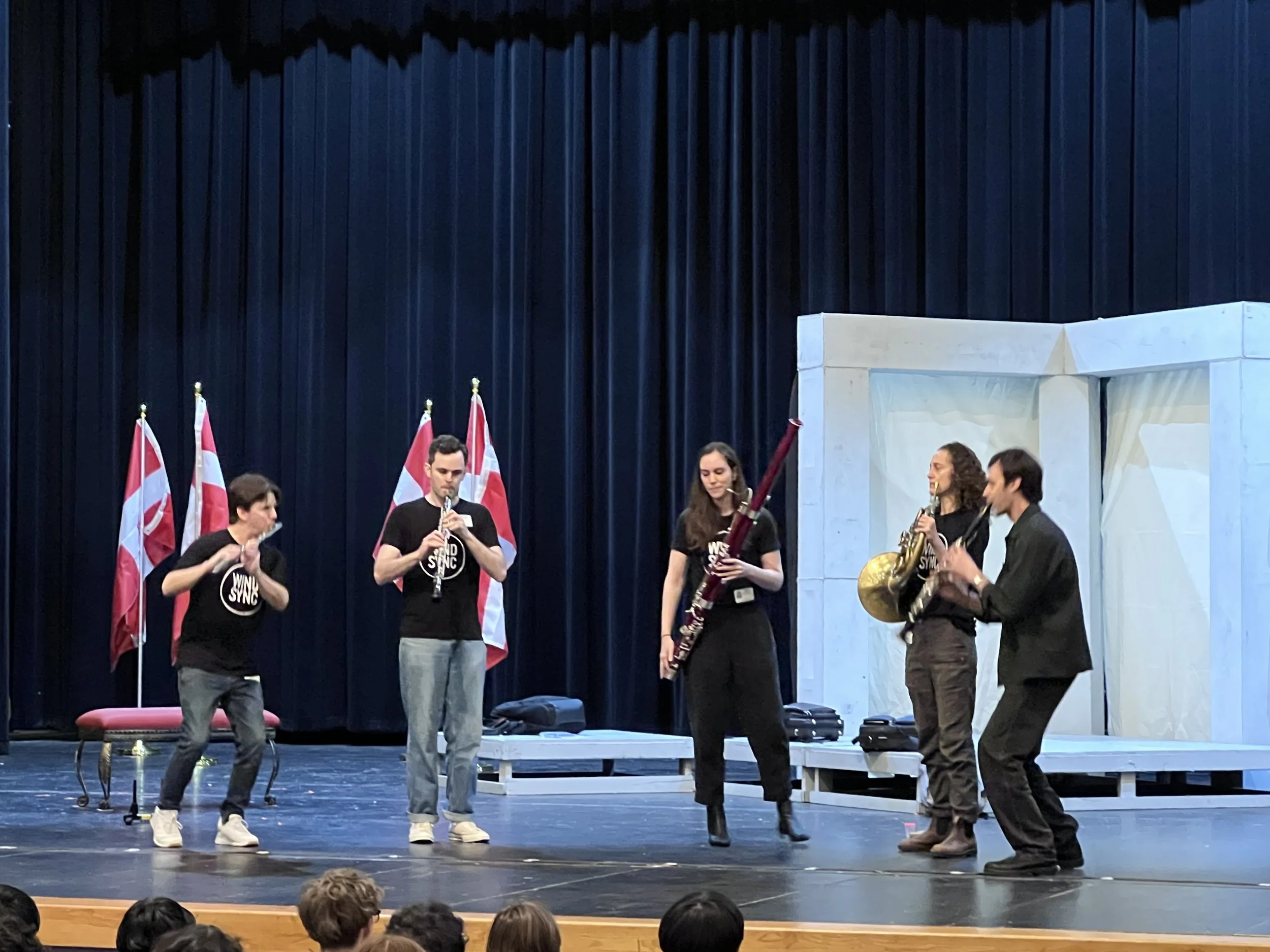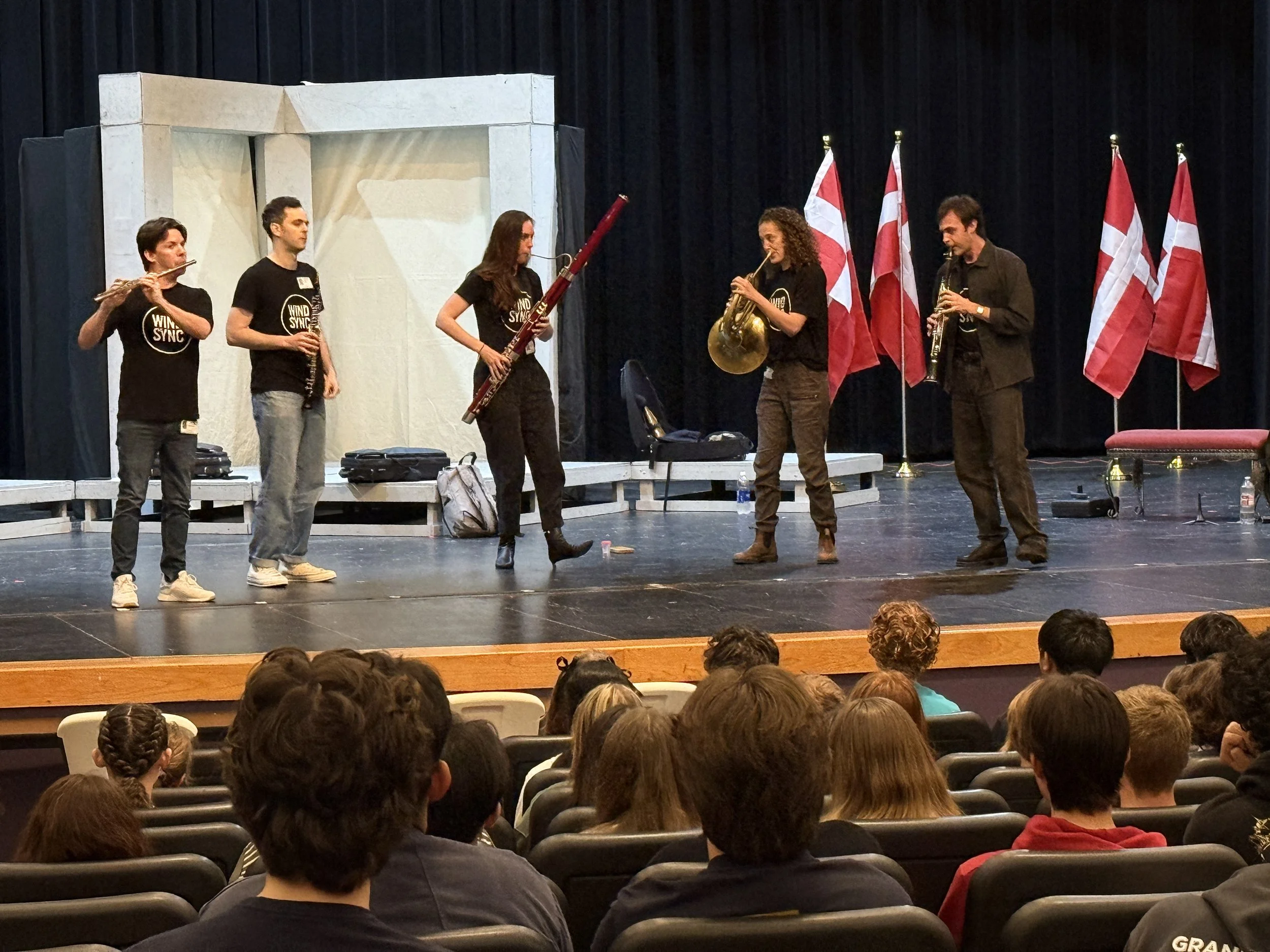
On Monday morning, March 2, the members of WindSync showed up to Reagan High School wearing their very own “WindSync” T-shirts and eager to put on a show for the school’s band program. Many of the students in this coveted program had been preparing their solo and ensemble repertoire and were just beginning to explore chamber music themselves. It was just the right time for them to experience an all-star group like this.
SACMS President Daniel Anastasio welcomed the students and briefly introduced the organization, reminding them that SACMS concerts are always free for students. He mentioned the previous day’s concert, which featured Gershwin’s Rhapsody in Blue and other American works, before introducing WindSync. The quintet explained that although they now perform internationally, they actually began as a student ensemble at Rice University seventeen years ago. That origin story resonated with the students in the room, who were just beginning to consider careers in music themselves. Feeling their attention, WindSync immediately engaged the audience with questions about grade levels, instrumentation, and chamber music experience. When they learned the audience consisted primarily of Reagan’s woodwind students, they joked that they were glad to be “among friends.”
WindSync opened the session with music that reflected the ensemble’s adventurous repertoire, including selections written for them by contemporary composer Marc Mellits. These pieces, Debbie Waltzing on the Moon and Moonwalk, showcased the ensemble’s rhythmic precision, colorful sound, and close-knit coordination. These works were lovely and palatable, with beautiful harmonies and relatable grooves.
After the performance, the musicians introduced themselves and described their musical paths. Several began in public school band programs very much like Reagan’s, the clarinetist Graeme Steele Johnson explained. Garrett Hudson, originally from Canada, said he didn’t even realize chamber music could be a career until college. Others described studying at institutions such as Eastman, Northwestern, Yale, and the University of Texas before ultimately gravitating toward chamber music, drawn by the artistic freedom and collaborative spirit of small ensembles. They were trying to impart that there was no urgency to finding one’s musical path; enjoy the process, and when the timing and circumstances are right, something may spark deeper inspiration.
The quintet then performed George Gershwin’s iconic “Summertime” from his opera Porgy and Bess, using it as an opportunity to discuss how chamber musicians communicate without a conductor. Prompted to share what they noticed after the beautiful, tender performance, several pointed out how the musicians physically moved together physically, from pulsing the beat to gesturing dynamics to cueing entrances. The ensemble explained that this movement (along with eye contact, cueing, and mirroring) forms the “music before the sound,” the silent communication that helps musicians stay together and shape the character of a piece. They also demonstrated how a soloist emerges within an ensemble when the moment calls for it. Even when the dynamics between players appear identical on the page, the player with the perceived melody may project differently through phrasing, rhythmic flexibility, or ornamentation, while the accompanying players provide a steady foundation. How do they determine who has the solo, or the main line at any given moment? Through intuition, discussion, and trial and error in rehearsal.
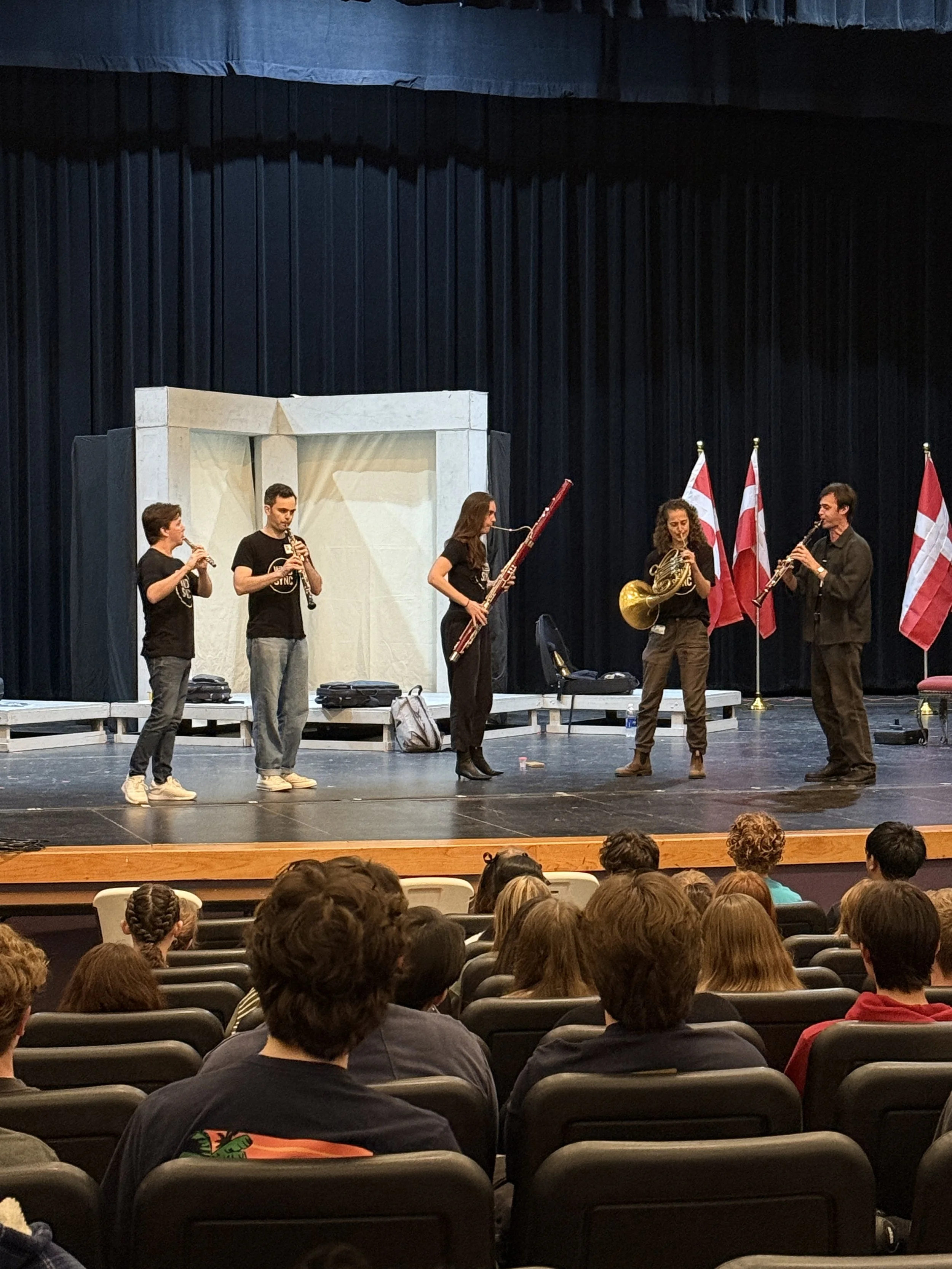
Later, WindSync offered a short history of the wind quintet, explaining how composers such as Mozart helped elevate wind instruments from background entertainment into serious concert music. Their performance of the opening movement of Mozart’s Serenade in C minor illustrated how this repertoire helped establish wind chamber music as a respected art form.
The session concluded with a thoughtful Q&A. Students asked how the ensemble rehearses while living in different cities, and the musicians explained that much of their preparation happens individually before rehearsals begin, with individual practice. Each member studies not only their own part but also the other parts in the score so that rehearsal time can focus on listening, refining, and communicating. Another student asked whether playing in a chamber group changes the way they understand music more broadly. Kara LaMoure, WindSync’s bassoonist, explained that wind quintet playing requires each musician to rotate constantly through musical roles — melody, accompaniment, inner voices, and bass lines. Over time, this deepens a player’s understanding not only of the music itself, but of the physical and musical challenges faced by the other instruments in the group.
Before closing, Kara thanked the Reagan band program and its director, Brett Nelson, for welcoming them. The morning offered students a rare opportunity to observe professional chamber musicians up close, and WindSync’s combination of virtuosity, humor, and thoughtful insight left a strong impression. Through events like this, SACMS continues to connect world-class artists with young musicians, offering inspiration and a glimpse into the collaborative world of chamber music.