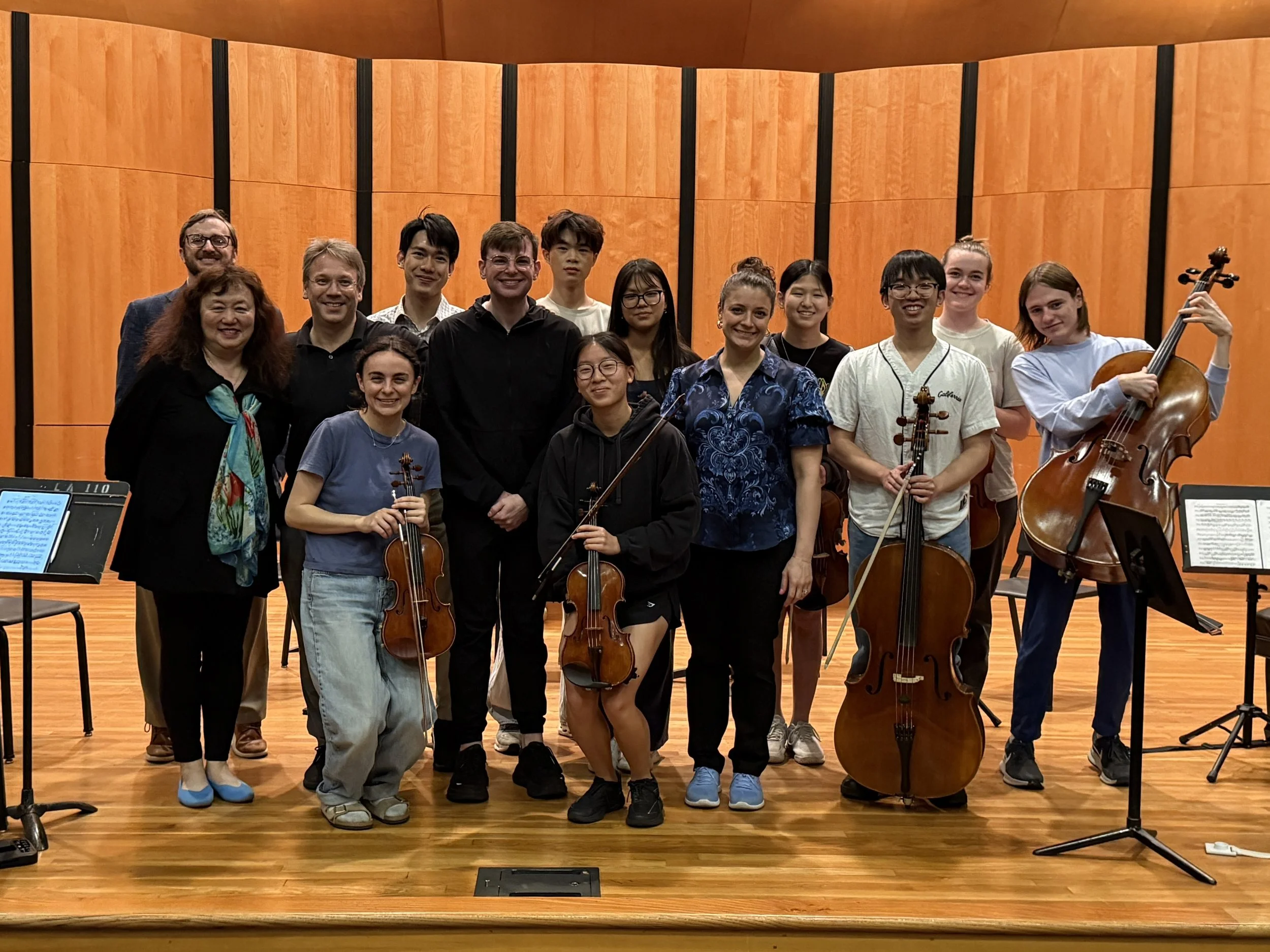
Chamber Music Society of Lincoln Center at Trinity University
Not every outreach event needs to involve a big crowd. In fact, when students have the opportunity to work with great artists in a more personal and direct way, it can create a lifelong effect. Musicians from the Chamber Music Society of Lincoln Center took time to do just that at Trinity University (Ruth Taylor Hall), where eight students performed the slow movement of Felix Mendelssohn’s Octet for strings. Hosted by orchestra director Joseph Kneer, the class brought together advanced student musicians and faculty members for a morning of performance, coaching, and discussion centered around ensemble playing, sound production, listening, and musical communication.
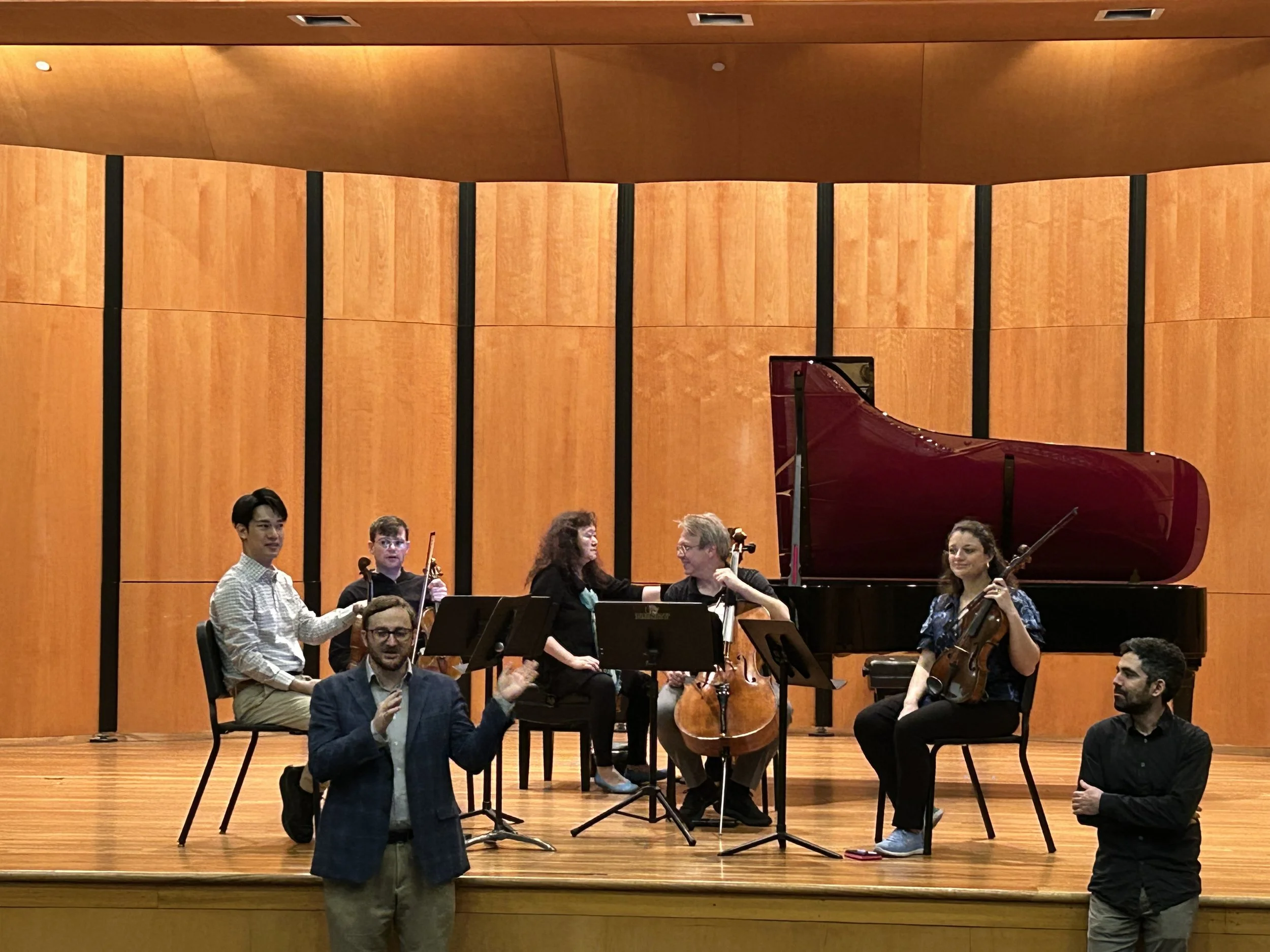
But first, the CMS artists performed themselves – movements from two rarely-heard piano quintets by Anton Arensky and Camille Saint-Saëns. Using the contrasting works to demonstrate different approaches to sound, color, vibrato, and character, pianist Wu Han spoke directly to the students, emphasizing the importance of imagination in performance and encouraging the students to think beyond notes and technique toward atmosphere, style, and storytelling. In discussing the Arensky, she described the strings as searching for a “passionate, fat, juicy vibrato” and a richly vocal, almost operatic sound world inspired by Russian musical traditions.
Wu Han and cellist Dmitri Atapine also shared historical context about Saint-Saëns and French chamber music, highlighting the composer’s role in championing chamber repertoire in France at a time when opera dominated musical life. Students heard how both Saint-Saëns and Mendelssohn composed astonishingly mature works at remarkably young ages, prompting discussion about musical prodigies, craftsmanship, and compositional imagination.
Following these spectacular performances that filled Ruth Taylor Hall with glistening piano textures and bold, singing string lyricism, the students performed the slow movement of Mendelssohn’s Octet and received detailed side-by-side coaching from the CMS artists, including violinists Chad Hopes and Richard Lin and violist Milena Pajaro-Van De Stadt, as well as Wu Han and Atapine. Much of the session focused on the practical realities of ensemble playing: pulse, balance, articulation, communication, and listening. The musicians encouraged the students to physically adjust their setup into a more connected “horseshoe” formation in order to better hear and respond to one another, emphasizing that chamber music depends on constant awareness and shared rhythmic intention.
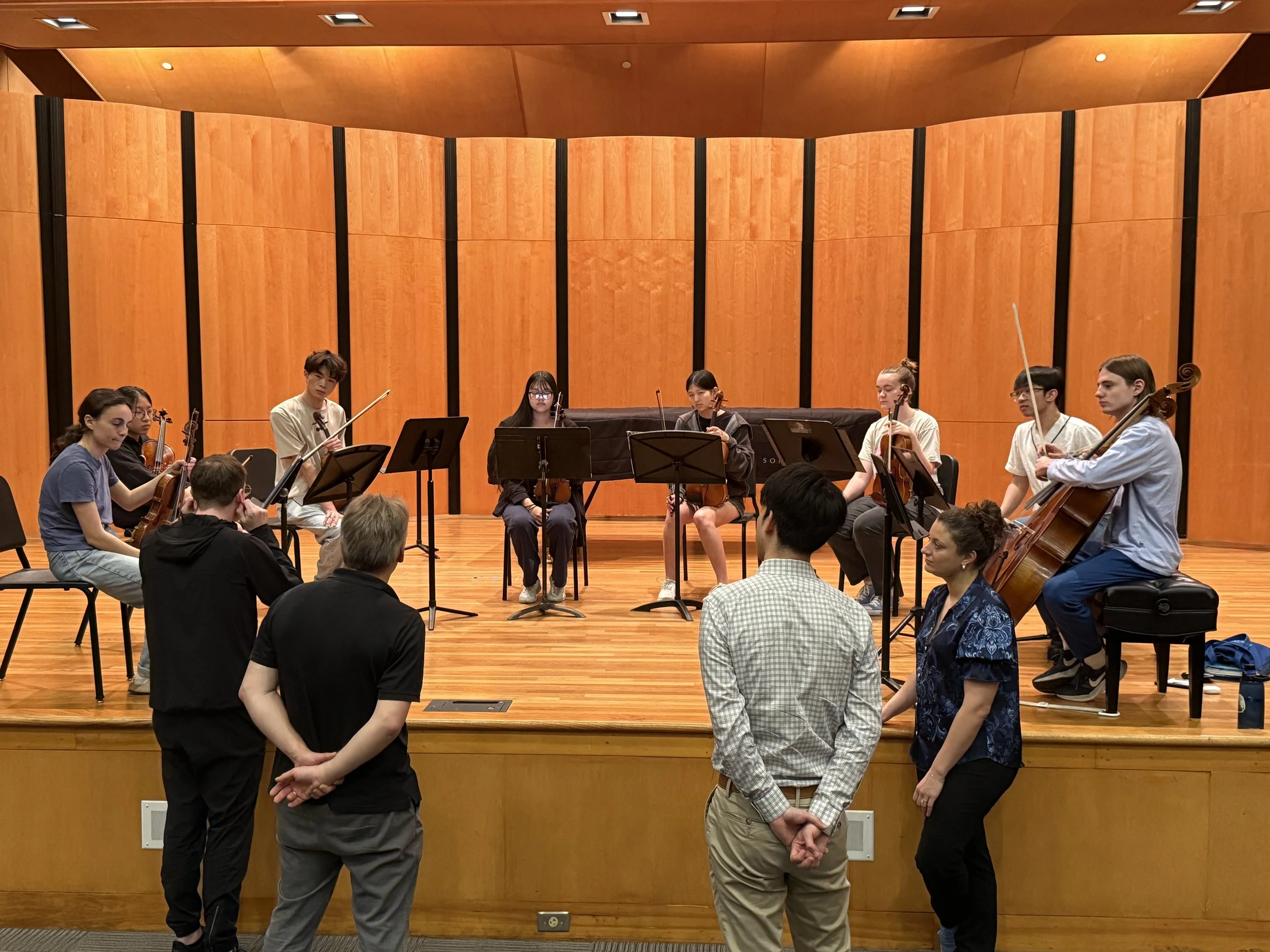
Throughout the coaching, the artists repeatedly returned to the importance of listening, both to one another and to great performances. Students were encouraged to attend live concerts whenever possible, study historic recordings, and develop a strong internal concept of sound and phrasing. Hoopes remarked that discovering his own personal sound mattered far more than owning an expensive instrument, reminding students that artistry ultimately comes from imagination, ears, and musical conviction rather than equipment alone.
The outreach concluded with an extended Q&A session covering practice habits, scales, listening, recordings, collaboration, and professional life as a musician. The CMS artists spoke candidly about the lifelong process of refining ensemble precision and musical taste, encouraging students to approach fundamentals not as chores, but as opportunities for mindfulness, curiosity, and artistic growth. Students also received recommendations of legendary violinists and recordings to explore as they continue developing their own musical voices.
The event offered students a rare opportunity to experience world-class chamber musicians up close in an interactive setting, reinforcing the society’s ongoing commitment to connecting young musicians in San Antonio with leading artists through meaningful educational engagement.