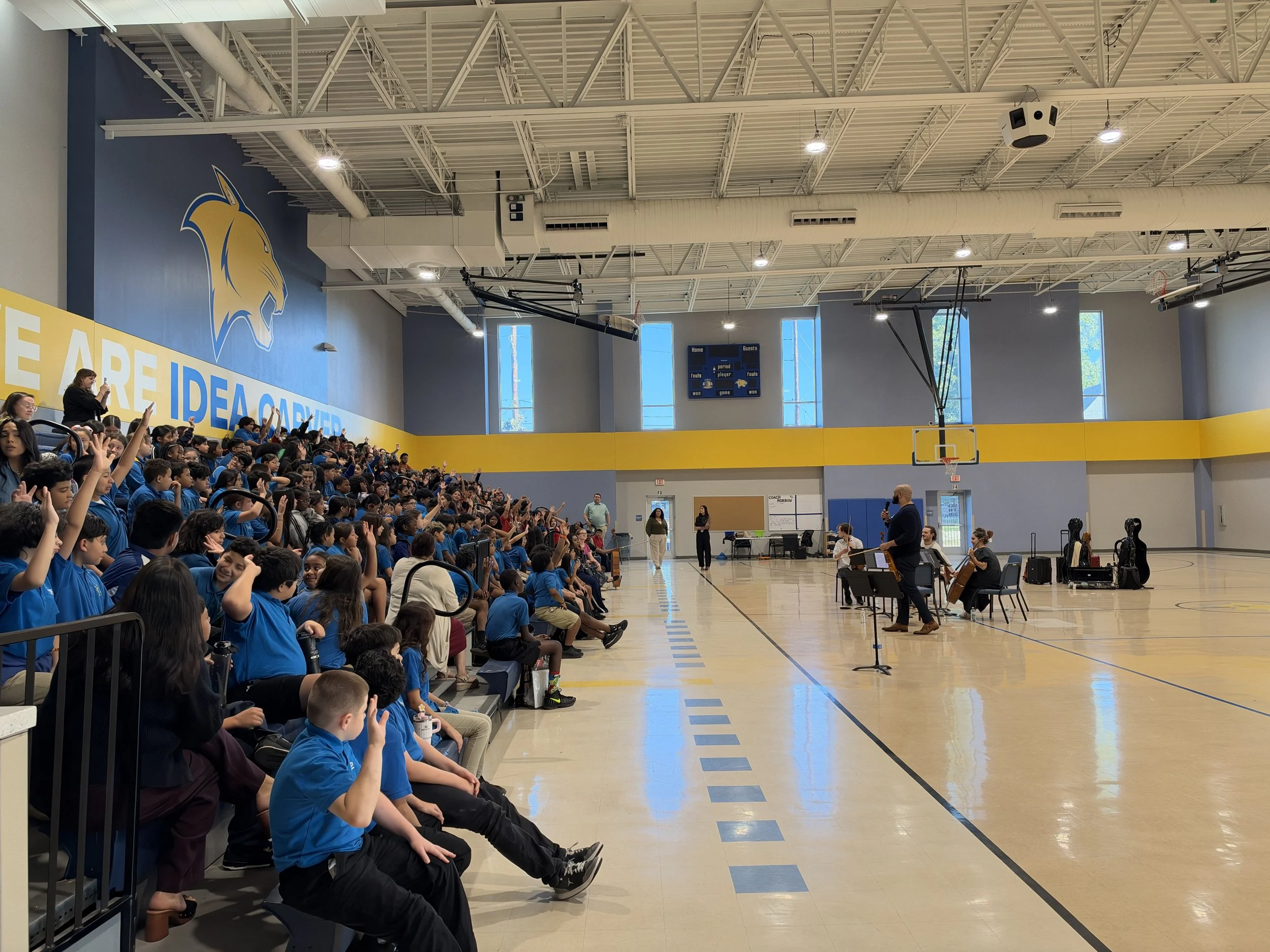
The San Antonio Chamber Music Society was delighted to bring the acclaimed Isidore String Quartet, joined by guest cellist Sterling Elliott, to IDEA Carver for a special educational outreach performance attended by approximately 300 middle and high school students. The event offered students an opportunity to experience world-class chamber music up close, learn about the instruments and musicians, and engage directly with the performers through a lively and thoughtful question-and-answer session.
The morning began with a warm welcome from Andrea "Vocab" Sanderson, Arts Education Coordinator at the Carver Community Cultural Center, who introduced SACMS President Daniel Anastasio. Daniel explained the Society's mission of bringing outstanding musicians from around the world to San Antonio, not only for public concerts but also for free educational performances in local schools. He encouraged the students to listen carefully, reminding them that an attentive audience plays an essential role in bringing music to life.
The quartet opened with an exhilarating movement from Frank Bridge's Three Idylls, immediately introducing students to the energy, virtuosity, and expressive possibilities of a string quartet.
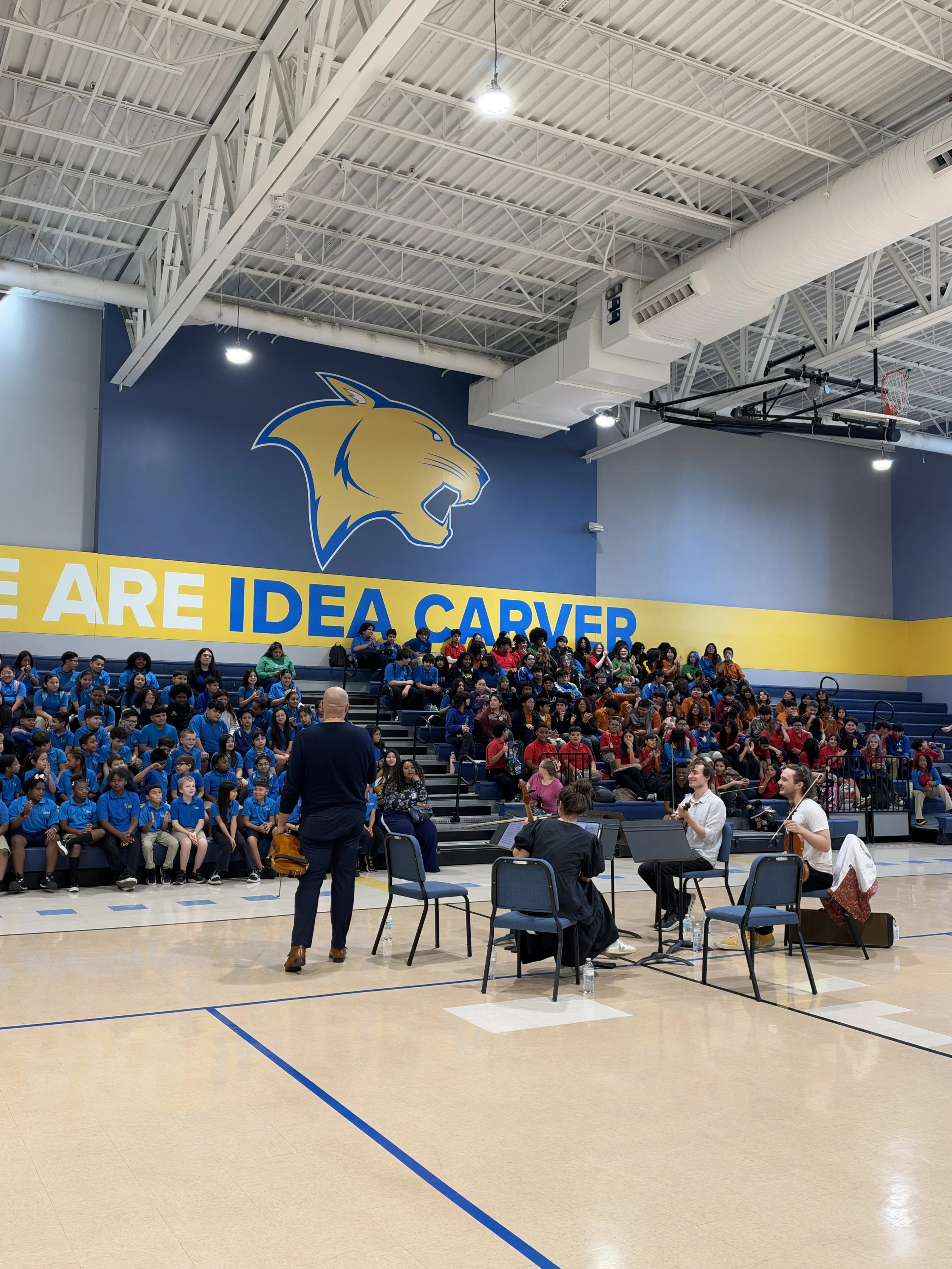
Following the brief, attention-grabbing performance, violist Devin Moore introduced the ensemble and invited students to consider the different instruments onstage. Through an interactive demonstration, students learned about the traditional makeup of a string quartet (two violins, viola, and cello) and discovered the differences between the violin and viola, including their sizes, ranges, and strings. The musicians also explained how each instrument contributes to the ensemble, from the melodic role often played by the first violin to the harmonic and rhythmic foundations provided by the lower strings.
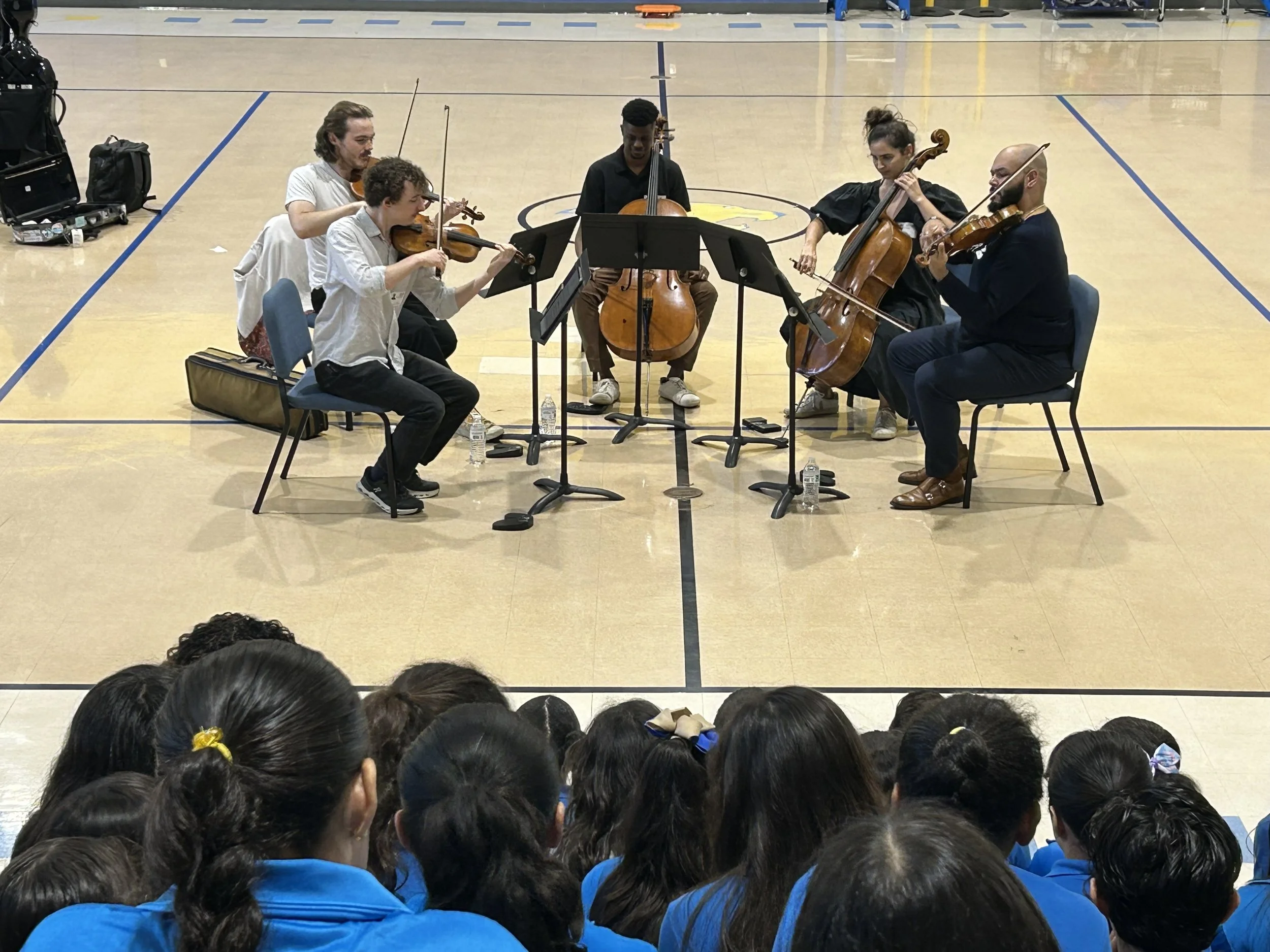
The quartet then welcomed guest cellist Sterling Elliott, introducing the unusual combination of two cellos with a string quartet. Elliott invited students to think about the music they enjoy dancing to, explaining that classical music also has a rich history of dance traditions. The five musicians demonstrated this connection with the lively third movement of Franz Schubert's String Quintet in C major, D. 956, highlighting its rustic, folk-like character and infectious rhythmic energy.
The musicians then turned to the first movement of Schubert's quintet, introducing students to one of music's most fundamental expressive contrasts: major and minor harmonies. Through a demonstration of C major and C minor chords, students were invited to hear the difference between the brighter, happier qualities often associated with major keys and the darker, sadder qualities of minor keys. The ensemble then performed an excerpt from the first movement, encouraging students to listen for the subtle shifts in mood as Schubert moved between these contrasting musical worlds. Following the performance, Daniel emphasized this idea to the students, reminding them that music gives us an opportunity to experience the full range of human emotions—not only happiness, but also sadness, reflection, and everything in between.
The morning continued with an especially enthusiastic question-and-answer session, during which students demonstrated tremendous curiosity about the musicians and their instruments. One student asked how the musicians had trained to become professional performers. Each artist shared the story of how they began playing, with several describing musical families and childhood experiences that inspired them. Violinist Phoenix Avalon explained that he first became interested in the violin after attending an educational outreach concert much like the one taking place that morning—a wonderful illustration of the lasting impact these experiences can have on young people.
Other students asked whether the musicians composed their own music or performed arrangements of existing works. This led to a discussion of musical arranging, with the quartet explaining how a piece originally written for voices or other instruments can be adapted for string quartet.
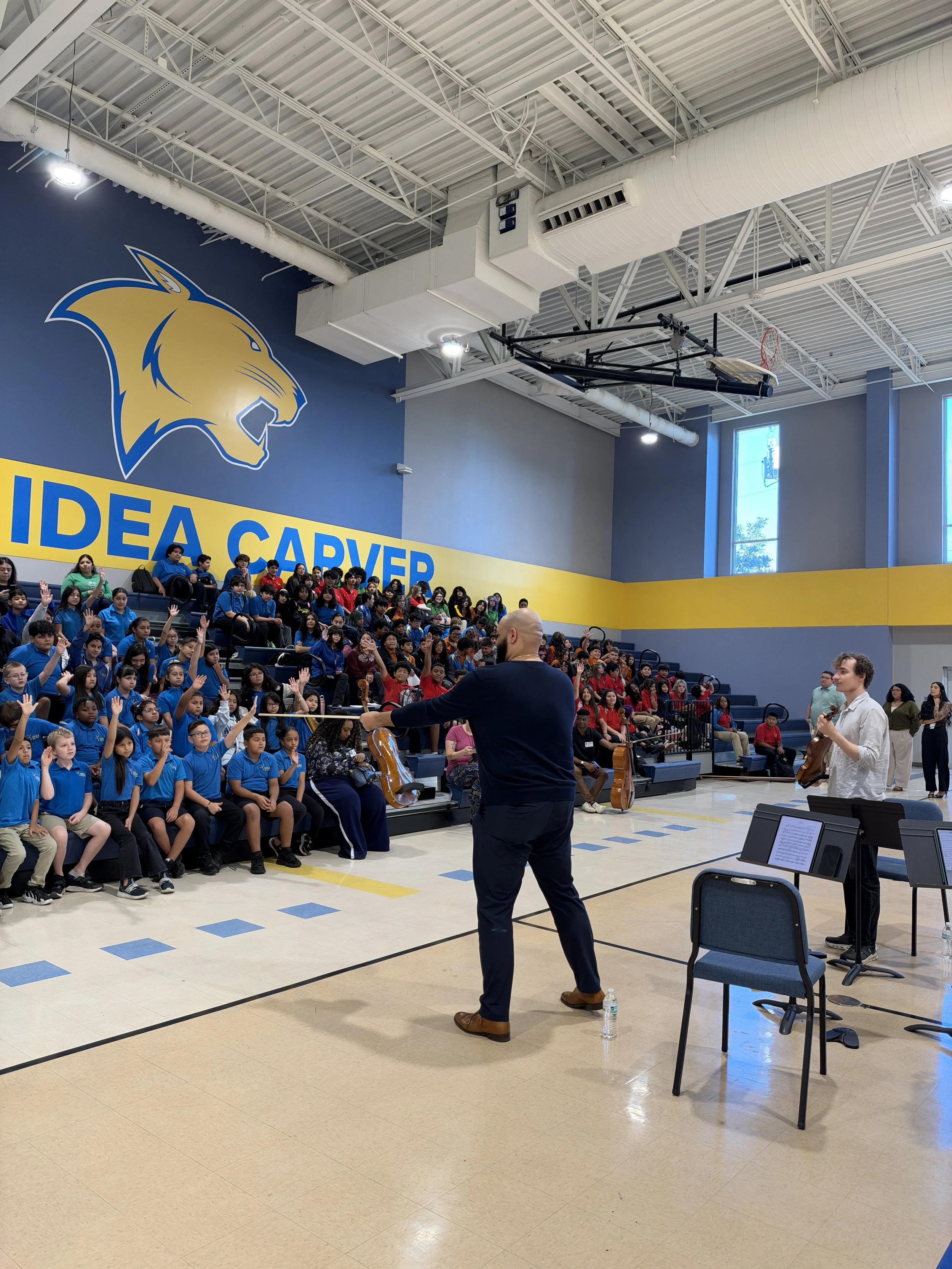
Students also wanted to know whether the musicians played other instruments, what inspired them to pursue music, and how much time they devoted to practicing. Devin described the extraordinary commitment required to perform at this level, explaining that the quartet often rehearses together for four to five hours a day, in addition to the individual practice each musician undertakes. He also emphasized the importance of trust, collaboration, and friendship in chamber music, describing the experience of playing in a small ensemble as a musical conversation in which every musician has an individual voice while contributing to a shared artistic goal.
Another student asked a perceptive question about the differences between the string instruments beyond their sizes and sounds. Cellist Clara Abel offered an imaginative explanation of the roles within the ensemble, comparing the inner voices of the second violin and viola to the delicious filling of an Oreo cookie—the essential middle that holds everything together!
The event concluded with another raucous, high-energy excerpt from Schubert's String Quintet in C major, bringing the morning to an exhilarating close and giving the approximately 300 students one final opportunity to experience the excitement of live chamber music. This special performance, in a gym of enthusiastic students, demonstrated the potential for live musical encounters to inspire the next generation. As Phoenix Avalon's own story illustrated, a single outreach concert can be the beginning of a lifelong relationship with music.